Automation
Coordinates equipment and control actions so the process operates automatically.
Integrate and execute PICSPhilippine Instrumentation & Control Society Back to homepage
03 · Core discipline
Automation is the engineering application of control systems, computers, software, communication networks and industrial equipment to perform processes or tasks automatically with minimal human intervention.
See how it works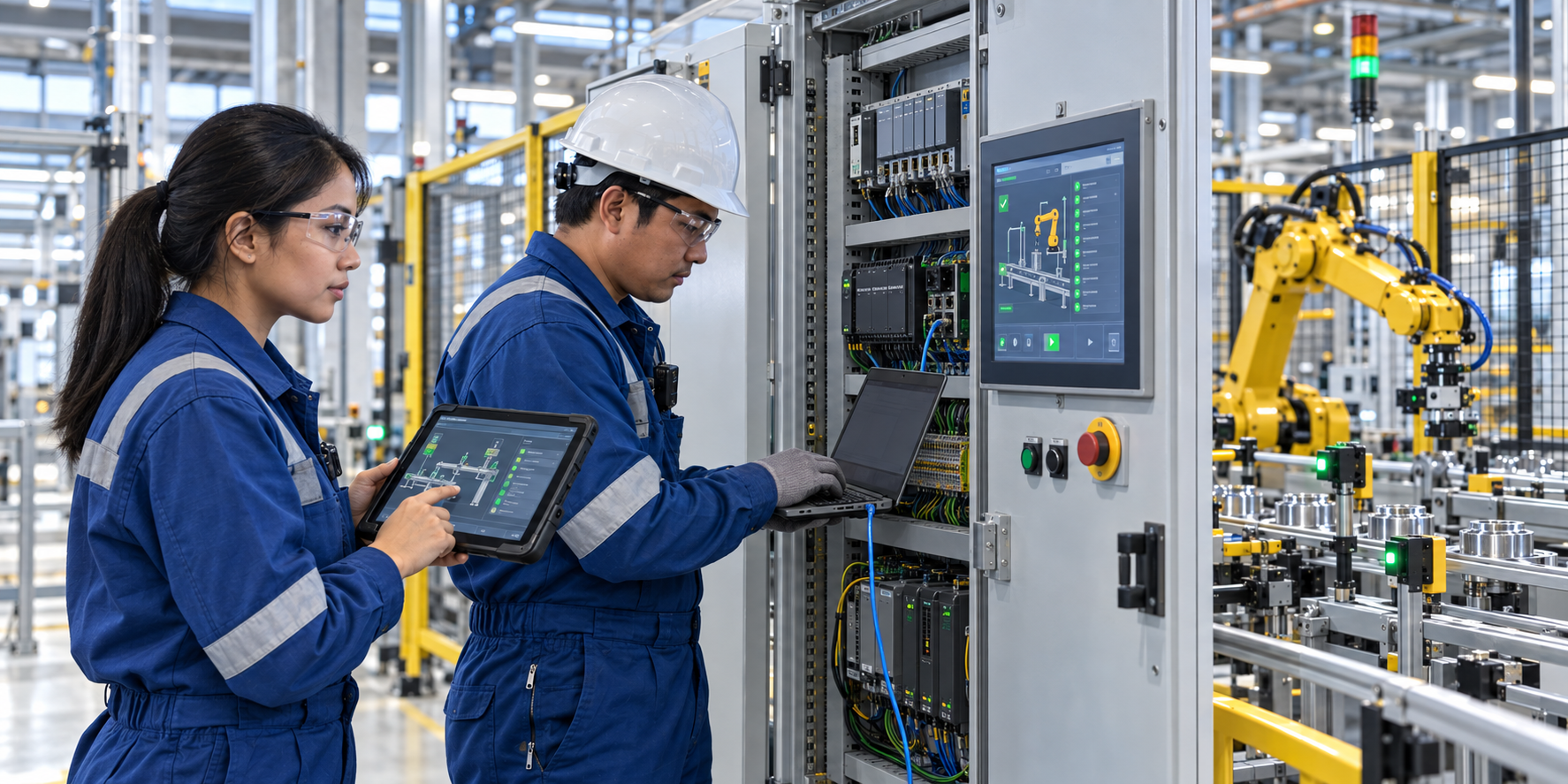
Three connected disciplines
Automation builds on instrumentation and control. Together, the three disciplines allow a process to understand its condition, determine the correct response and carry out coordinated actions.
Measures what is happening in the process.
Sense and communicate 02Determines the necessary corrective response.
Compare and correctCoordinates equipment and control actions so the process operates automatically.
Integrate and executeHow it works
An automated system reads the process, evaluates programmed conditions and directs machines to perform the correct operation. Feedback confirms the result and allows the cycle to continue.
Sensors identify products, conditions and process values.
Industrial networks deliver information to controllers and systems.
A PLC or industrial computer checks logic and operating conditions.
Motors, drives, valves and robots perform the required operation.
Feedback confirms the result, records data and starts the next cycle.
A sensor detects an arriving product, the PLC evaluates the programmed sequence, a conveyor positions it, machine vision inspects it, and a robot completes the operation. The system records production data and safely handles faults through alarms and interlocks.
Building blocks
Industrial automation combines field equipment, control hardware, software and communications into a dependable operating architecture.
Execute logic, sequences and coordinated process-control functions.
Give operators visibility and supervisory control.
Connect instruments, controllers and equipment.
Turn controller commands into physical movement.
Perform repeatable handling and production operations.
Inspect, identify and guide automated equipment.
The profession in action
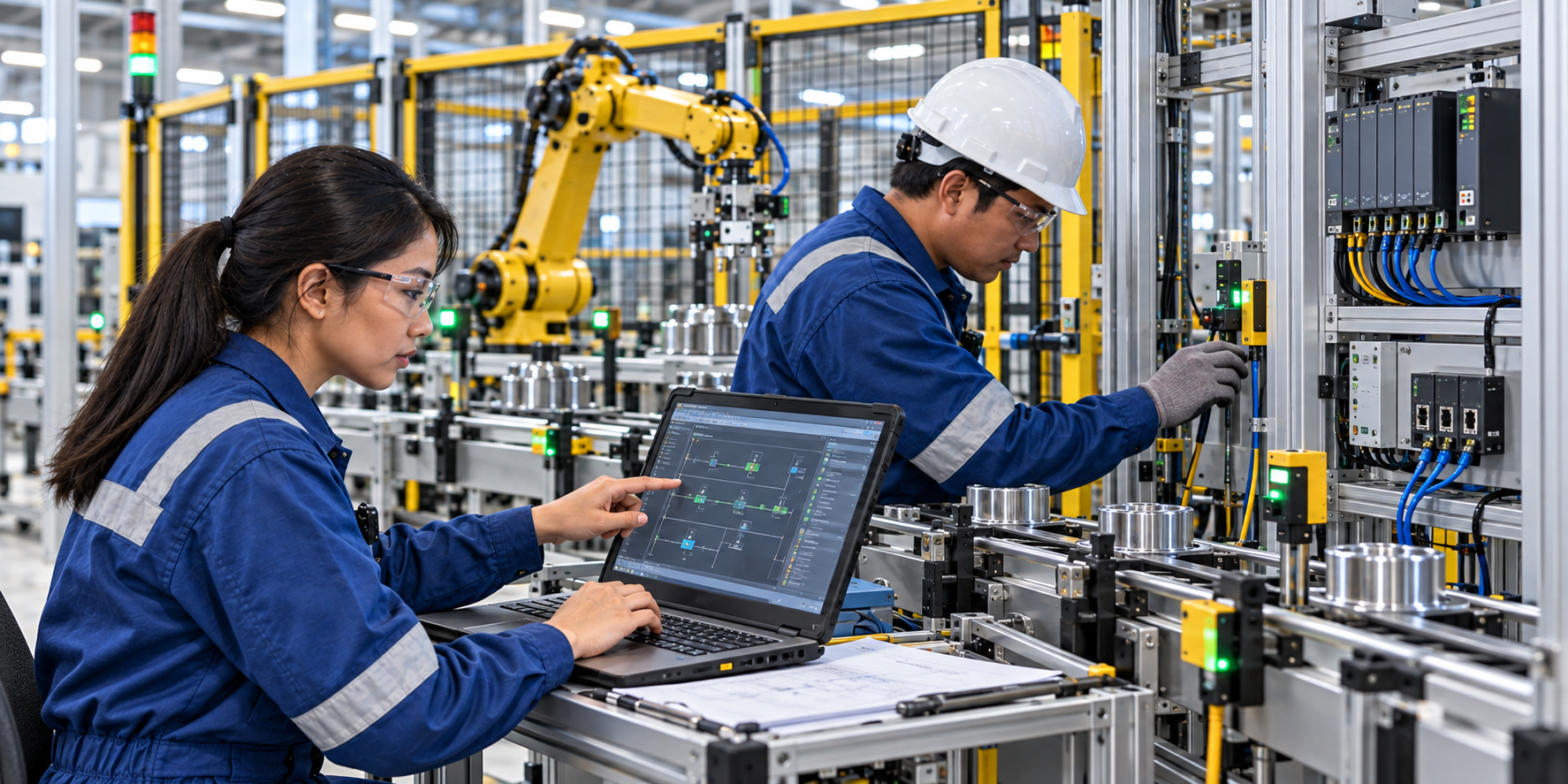
Automation professionals bring instruments, controls, machines and information systems together to improve productivity, consistency, safety and reliability.
In simple terms
Automation enables instruments, controllers, software and machines to work together—allowing an industrial process to perform the correct actions automatically.